HoneyBee
"HoneyBee" is a stereoscopic 3D video. A year-long residency at the Texas Learning and Computation Center (TLC2) at the University of Houston allowed me to access 3D technologies including a 3D theatre, 3D software, monitor, 3D video camera, and support staff. I thought this technology would be a good fit for my chosen subject, the Honey Bee. I began photographing insects and reptiles a few years ago, intrigued by the way zoos displayed and curated them. Their fluorescent-lit habitats seemed to distance them as a species more from the visitor than the outdoor enclosures for land animals such as sheep (New Animals). When considering the bee, an air-borne insect, as a subject for a video, I thought it would be interesting to use 3D to give the viewer a sense of sharing the same space with bees, rather than having the insects recessed behind a framed picture plane.
My approach to making video begins with shooting footage that I later edit on the computer. I pair this footage with a soundscape I design using found audio sources such as a news radio recording on the Web or a sound effect CD. In Honey Bee, I pair sound bytes from Green Revolution-era films with original video footage of bees in gardens and hives from Houston, Texas. I intercut the narrator extolling the virtues of agricultural aviation with the sound of a swarm of bees. I cut the video of peaceful bees and flowering basil with extreme close ups of an observation hive and pinned bee specimens. The close-ups, like the audio, (almost painfully) disrupt the 3D plane of vision. These aural and visual interruptions puncture the seductive reassurance of a linear narrative as a commitment to the experimental aspect of this project.
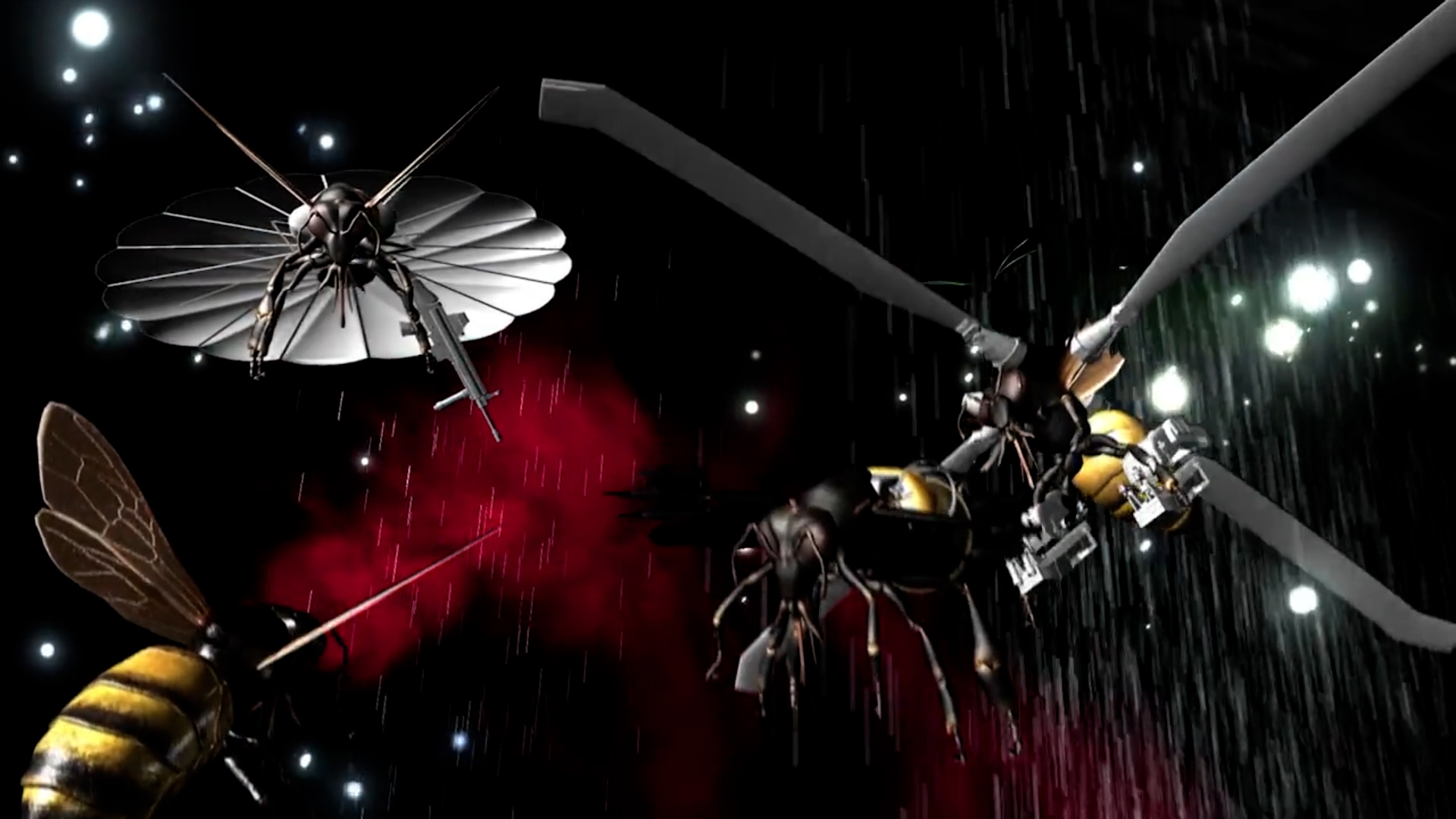
I also felt motivated to bring attention to this creature as recent news reported that it may soon be extinct for reasons not quite understood. I began researching this phenomenon, called Colony Collapse Disorder, in relation to other issues such as the effect of pesticides and GMO crops on bees and butterflies and the role of government in monitoring food safety. The research on scientific and military uses of bees led me to look at another aspect of 3D media, the computer game. Recently, artists, gamers, and programmers have attempted to rescript this dominant use of the technology. For example, a group women gamers rallied against "Lara Croft's square butt" (a character from the Tomb Raider video game) and agitated for changes within this largely male-dominated technology. And a community of DIY authors, with accents from Irish to Iraqi, produced YouTube tutorials to help others learn to create their own games or videos. With their help, I was able to create a virtual world de-forested by pink space gas, populated by cyber bees made of military surplus weapons, as a playful commentary that weaves together these concerns.
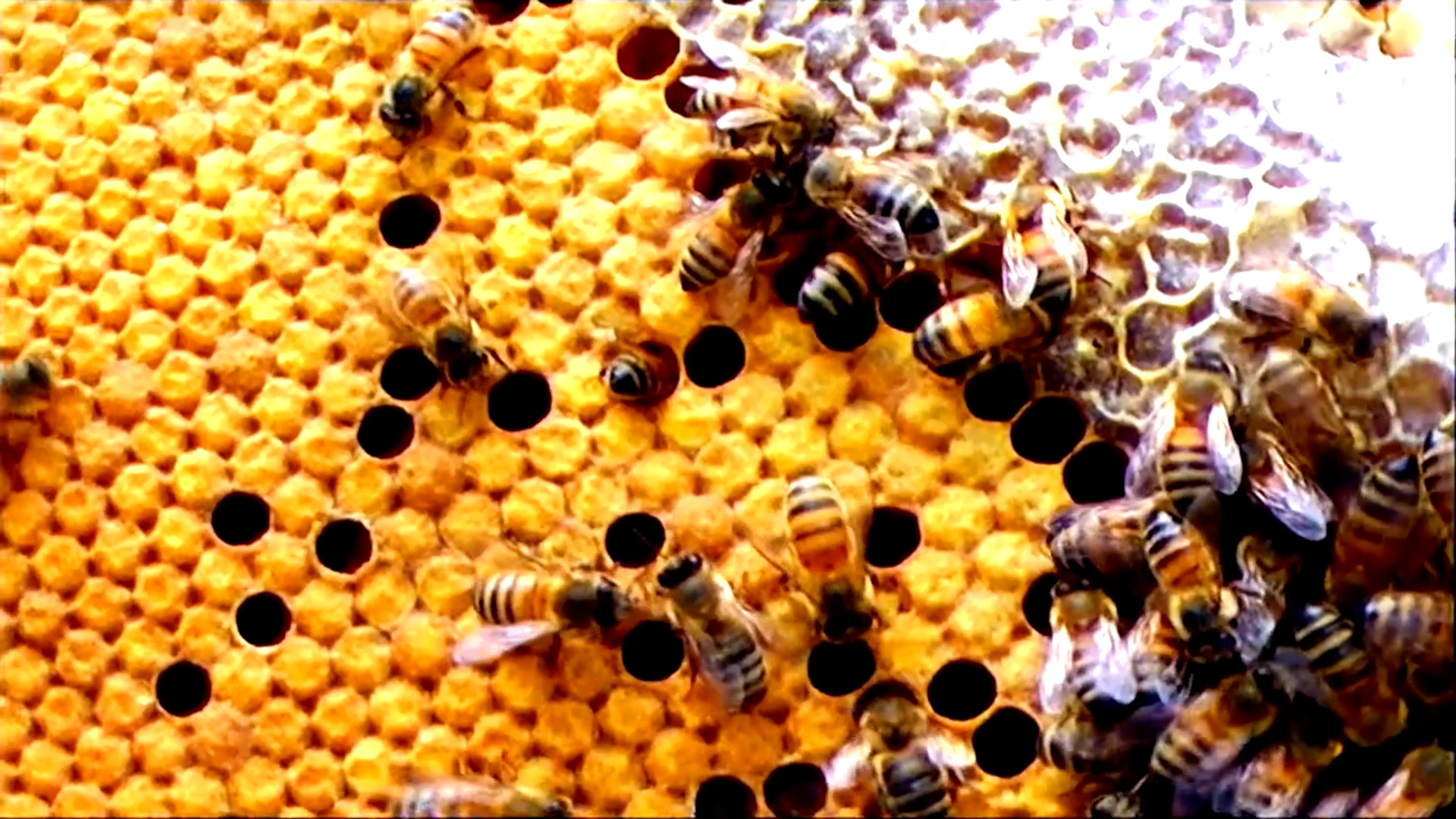
Still from "HoneyBee"